
laisser un message
Si vous êtes intéressé par nos produits et souhaitez en savoir plus, veuillez laisser un message ici, nous vous répondrons dès que possible.


Why Premium Yoga Brands Favor PU Yoga Mats
In the highly competitive fitness and wellness market, global brands must differentiate themselves through uncompromising product performance and structural integrity. For product managers, procurement officers, and brand owners evaluating inventory expansions, selecting the foundational material for commercial-grade yoga lines is a critical technical decision. While entry-level consumer segments remain saturated with low-cost synthetics, the premium tier of the market has established a clear, material-science preference for Polyurethane (PU) compounded with a natural rubber base. Understanding the molecular characteristics, mechanical behaviors, and performance metrics of these materials is vital to optimizing a product portfolio for sustained market authority.
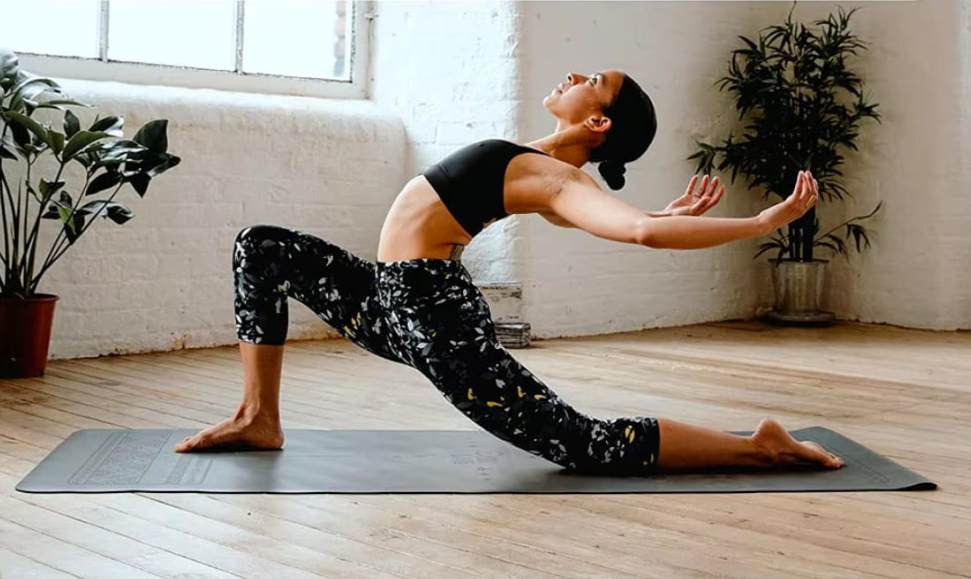
The primary performance metric of any professional yoga surface is the dynamic coefficient of friction, which determines a mat’s slip resistance during high-intensity, moisture-heavy practices like Ashtanga or Hot Yoga. Premium polyurethane sheets utilize an open-cell molecular structure. This open-cell architecture acts as a microscopic porous network that rapidly absorbs ambient surface moisture and perspiration.
When moisture is absorbed into the matrix, it is drawn away from the immediate contact zone, preventing the formation of a liquid macro-film between the practitioner’s skin and the mat. This mechanism keeps the dynamic coefficient of friction stable, which is exactly why professional studios prefer Anti Slip PU Yoga Mats over standard closed-cell alternatives. In stark contrast, closed-cell materials like standard Polyvinyl Chloride (PVC) and Thermoplastic Elastomers (TPE) do not possess this absorption capacity. Moisture remains trapped on the surface, creating a hydroplaning effect where the coefficient of friction drops dramatically, creating severe slipping hazards.
The horizontal gripping force on an open-cell polyurethane compound relies heavily on the true contact area. As the soft PU layer deforms under the weight of the practitioner's hands or feet, the microscopic pores expand, delivering unmatched dry-and-wet grip that synthetic TPE simply cannot replicate mechanically.
To assist technical buyers in identifying the precise performance trade-offs inherent in large-scale manufacturing, the following data table isolates the mechanical, economic, and environmental profiles of industrial-grade PU, TPE, and PVC formulations.
| Technical Parameter | Polyurethane (PU) + Natural Rubber | Thermoplastic Elastomer (TPE) | Polyvinyl Chloride (PVC) |
|---|---|---|---|
| Structural Composition | Open-cell PU surface layer heat-bonded to a high-density natural rubber base. | Closed-cell injection-molded block copolymers (styrenic compounds). | Closed-cell polymerized vinyl chloride with added plasticizers. |
| Density Range (g/cm³) | 1.25 – 1.40 (High density for superior structural stability) | 0.90 – 1.05 (Low density, highly lightweight) | 1.30 – 1.45 (Dense, heavy formulation) |
| Tensile Strength (MPa) | 12.5 – 18.0 (Extremely resilient against tearing and surface abrasion) | 3.5 – 5.5 (Prone to flaking and stretching under high shear forces) | 7.0 – 11.0 (Highly durable but rigid and brittle over time) |
| Moisture Mechanism | Active open-cell capillary absorption; maintains surface dryness. | Zero absorption; hydrophobic surface creates fluid pooling. | Zero absorption; hydrophobic surface requires secondary towels. |
From an orthopedic and mechanical engineering standpoint, a yoga mat acts as a dampening system for human joints. When a practitioner executes a dynamic transition, the mat must absorb the kinetic energy and distribute the vertical force vectors horizontally across the substrate. This behavior is governed by the material's compression deflection and tensile modulus.
High-density natural rubber coupled with a top PU film provides an ideal balance of immediate deflection and rapid rebound energy. Because natural rubber exhibits a high elastic recovery rate, it prevents the localized bottoming out common in cheaper alternatives. When scaling up operations, brands looking to establish premium market lines often focus on procuring Wholesale Customized Printed yoga Mats, ensuring that these internal mechanical properties are paired with striking, UV-stabilized graphics that withstand thousands of compression cycles.
Standard TPE and PVC formulations suffer from high compression creep. Under sustained loading, the polymer chains permanently displace, leaving permanent indentations where the hands and knees rest. The cross-linked polymer network of PU ensures that even after hours of high-pressure load exposure, the material returns to within 98% of its original nominal thickness, guaranteeing a lifespan that justifies a premium retail price point.
For brand developers looking to scale their operations, aesthetic customization must not compromise structural performance. In retail environments, a clean and permanent brand mark is essential for long-term equity. The structural chemistry of polyurethane allows for advanced customization methods that are practically impossible on standard foams.
Premium lines utilize ultra-precise computer numerical control (CNC) laser engraving to etch logos into the PU layer. Laser engraving vaporizes the top micron layer of the polyurethane, creating a permanent, sub-surface tactile marking that will never fade or peel. Procurement departments looking to build proprietary equipment lines should collaborate directly with a specialized Custom Logo Yoga Mat Factory. This direct relationship ensures the industrial laser-etching processes are calibrated perfectly so they do not penetrate the core, thereby preserving the dampening properties of the underlying natural rubber base.
Deploying product lines in international markets requires careful navigation of regional consumer trends and regulatory frameworks. Western markets show a strong consumer willingness to pay a premium for equipment that combines elite performance with verified environmental safety. Polyurethane mats compounded with sustainably harvested natural rubber align perfectly with these demanding consumer demographics.
Premium PU mats meet the strict regulatory requirements of consumer safety standards, including Europe’s REACH regulation. Because high-quality PU manufacturing relies on thermal bonding rather than toxic chemical adhesives to fuse the top and bottom layers, the resulting products do not emit the volatile organic compounds (VOCs) associated with newly manufactured PVC lines. Investing in a highly engineered PU product line empowers brands to step away from low-margin price wars and securely position themselves in the high-margin premium lifestyle segment based on verifiable material science.


Our hours
Lundi 21/11 - Mer 23/11 : 9h - 20h
Jeu. 24/11 : fermé - Joyeux Thanksgiving !
Vendredi 25/11 : 8h00 - 22h00
Sam 26/11 - Dim 27/11 : 10h - 21h
(toutes les heures sont l'heure de l'Est)
 Français


 Réseau IPv6 pris en charge